
Phrasal verb
die back
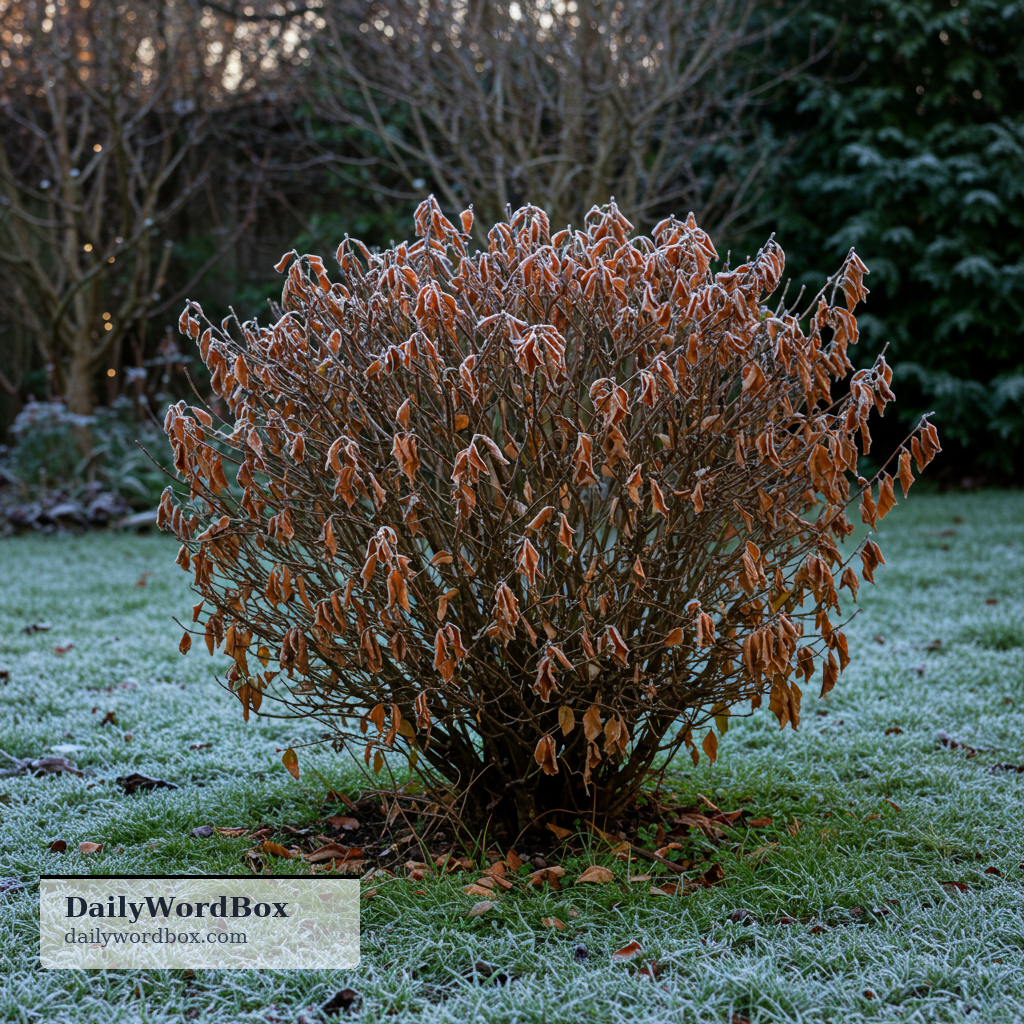
If a plant dies back, the visible parts become weak and die, usually from the tips, often in cold or dry conditions.
Meanings
(Of a plant) to have its leaves, stems, or branches die, often from the tips, usually because of cold, dryness, or damage.
(Of plant growth) to become smaller or weaker over time, so less of the plant remains alive above ground.
Definition
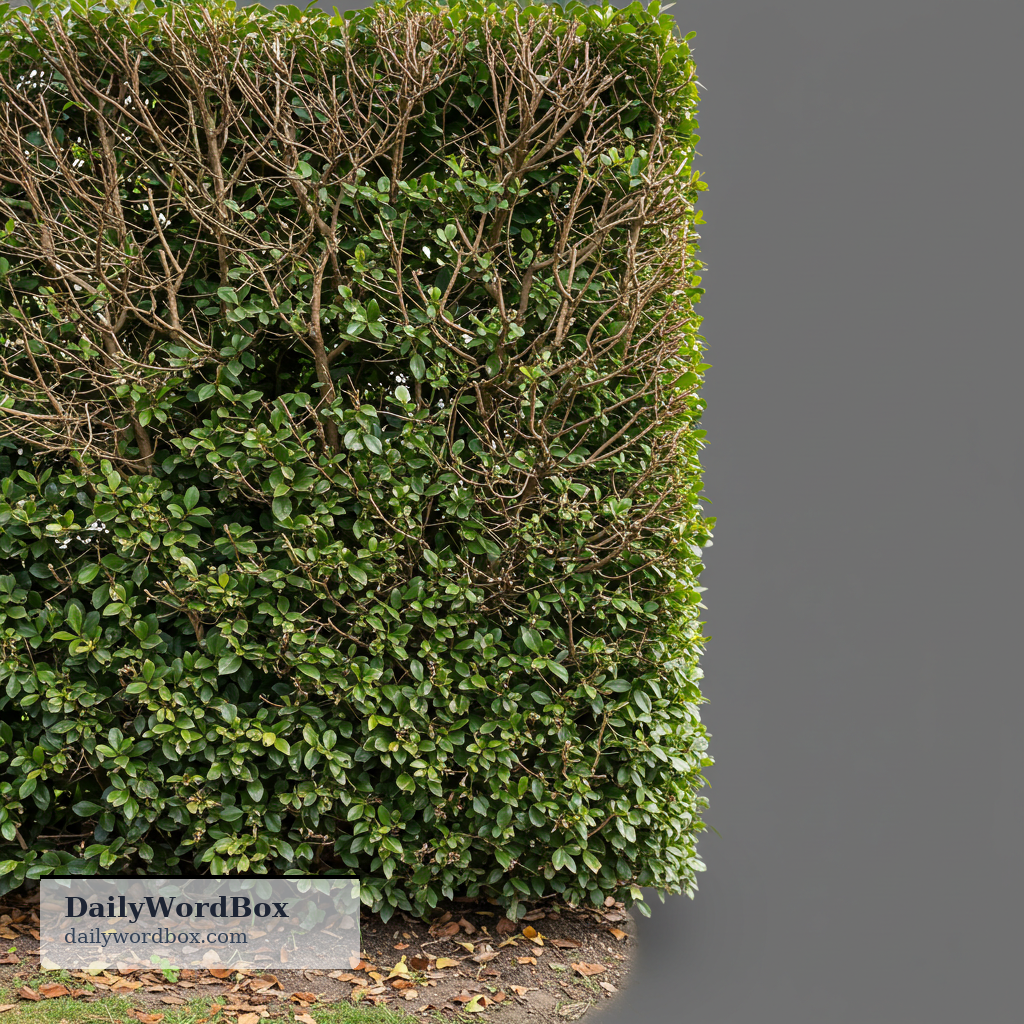
To die back means that a plant’s stems, leaves, or branches gradually die, especially at the ends, while the roots or lower parts may stay alive. It often happens after frost, drought, or disease. Gardeners use it to describe shrubs, perennials, and trees that lose growth but may recover later.
Examples
- After the late frost, my lavender died back to the woody stems.
- In very dry summers, your lawn can die back around the edges.
- The gardener noticed that his rose bush died back at the tips.
- By January, her potted ferns died back and looked almost bare.
- When they forgot to water the seedlings, the new growth died back quickly.
Common mistake
Learners often say "die down" for plants, but for plant parts becoming dead you usually say "die back."
More phrasal verbs
- go on To go on means to continue or keep happening.
- carry out To carry out something means to do it or complete it, especially a plan, task, or instruction.
- set up To set up means to arrange or prepare something so it is ready to use or happen.
- pick up “Pick up” most commonly means to collect someone or something from a place, usually by going there.
- go back To go back means to return to a place, time, or earlier situation.